




When the profits tax return is due is often the first question in the minds of a taxpayer after receiving a profits tax return from the Inland Revenue Department. The short answer is that the standard filing deadline is one month from the date of issue. The part that catches many business owners out is that the actual date may vary depending on the accounting year-end, presence of a tax representative, and the newness of the business.
For founders and SMEs, this is one of those compliance points that looks simple until it starts affecting cash flow planning, bookkeeping schedules, and year-end reporting. Getting the date right matters, but so does understanding why your filing position may not be the same as another company’s.
When is profits tax return due?
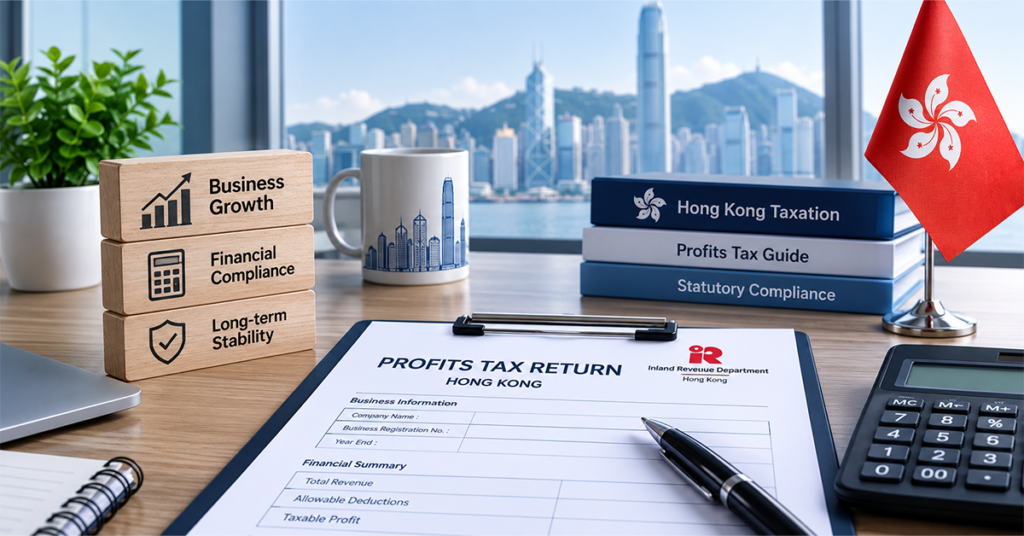
In Hong Kong, a Profits Tax Return is generally due within one month from the date shown on the return. That is the baseline rule. The deadline is typically 2 May if no special arrangements or extensions apply, when issued on 1 April.
However, not all businesses will file only during this one month. The reason is that the Inland Revenue Department allows an extended timetable in many cases where a tax representative handles the filing. This is commonly referred to as the block extension arrangement.
So if you are asking when the profits tax return is due for your business, the practical answer is: check the issue date first, then check whether you qualify for an extension based on your accounting date and filing arrangement.
Why the filing date is not always the same
The filing deadline often depends on the company’s accounting year-end. Different groups of businesses are grouped differently for extension purposes, and this has an impact on the time to prepare the financial statements and supporting schedules.
For instance, a company with a year end of 31 March will be different than a company with a year end of 31 December. This is important since proper year-end records, tax computations and supporting documents take time to prepare. A founder who assumes every company has the same deadline can end up planning far too late.
The broad pattern is that companies with accounting dates between 1 April and 30 November usually receive a longer filing period under the block extension system, while December and March year ends may follow different cut-off dates. The exact deadline can also be affected if the company is reporting a loss.
This is why a generic internet answer is rarely enough. The one-month rule is real, but the working deadline may be later if your filing is managed correctly.
What happens for newly incorporated companies
New companies are often surprised that they do not usually receive a Profits Tax Return immediately after incorporation. The first return is commonly issued around 18 months after the date of incorporation or the commencement of business, although timing can vary.
That delay does not mean you can ignore bookkeeping until the return arrives. Many startups rely on bookkeeping services Hong Kong businesses trust to keep accurate financial records from day one. Quite the opposite. When the first return is issued, you might have to consider a longer initial time frame, and if the records are not kept well from the get-go, that’s going to be more difficult.
For startups, this is where planning early saves time later. If your records are up to date and your accounts are prepared on schedule, the eventual tax filing becomes a routine process rather than a last-minute problem.
What you usually need before filing
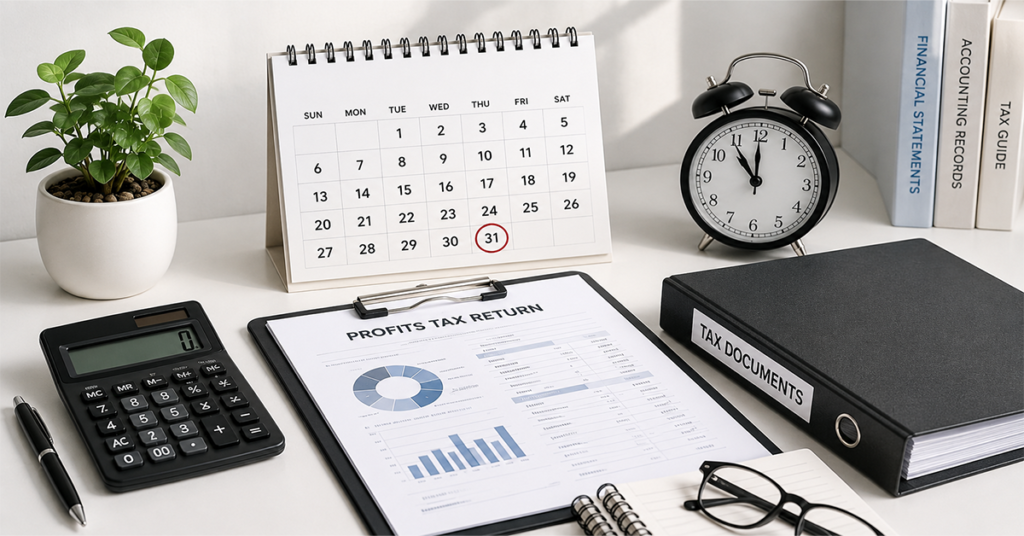
A profit tax return Hong Kong filing is not something you complete in isolation. The return is tied to your financial records and supporting schedules, so the due date is really a deadline for a package of work, not just a form.
In practice, most companies need properly maintained bookkeeping records, financial statements for the relevant basis period, and audit arrangements and financial reporting before preparing their tax computations. Depending on the business, this may also involve reviewing revenue recognition, expenses, related party transactions, and whether any offshore claim position is being considered.
This is where timing becomes commercially important. If your bookkeeping is behind, the tax return deadline quickly turns into an operational issue. Founders then end up chasing invoices, sorting old bank entries, and reconstructing records under pressure. That is avoidable with consistent year-round support.
Extensions can help, but they are not automatic in every situation
Many companies rely on filing extensions, but that should not be confused with unlimited extra time. Extensions usually operate within a structured framework, and missing the conditions or assumptions behind that framework can create unnecessary risk.
If a company is represented by a tax adviser, it may benefit from the block extension programme. Even then, the extended deadline still depends on the company’s accounting date category. Some cases also involve special treatment where a loss return is being filed.
What matters most is that the extension should be confirmed and tracked properly. Business owners sometimes hear that they have “more time” and stop there. A safer approach is to work from a specific filing date based on your company’s actual position.
What if you miss the deadline?
Missing the filing deadline is not just an administrative inconvenience. The Inland Revenue Department can issue estimated assessments if a return is not submitted on time. This is because it may be based on a guess and not your actual values, leading to cash flow problems and added effort in rectifying the situation later.
Repeated delays in filing or poor record-keeping can result in penalties or further action, especially if filing is done on a late basis. When this happens as a simple mistake, the consequences can be costly and time-consuming to rectify.
But distraction is the larger issue for owner-managed businesses. After the first missed date, management has to focus on the aftermath of the missed date, rather than on running the business, including the processing of follow-up notices, chasing documents and responding under time constraints. It is usually much easier to make sure you don’t get into that situation.
How to manage the profits tax return due date properly
The most reliable approach is to treat the tax return deadline as the final checkpoint in a wider compliance calendar. An accurate and timely return will be much easier if your bookkeeping, financial reporting and year-end preparation have been done correctly.
To work backwards from your accounting year-end is helpful, not forwards from the date you issue your return. It provides enough time to close the books, recap the big transactions, straighten out any missing records, and get the numbers ready.
Good small business accounting Hong Kong practices make it much easier to prepare financial statements, monitor cash flow, and meet tax deadlines without unnecessary pressure.
This is more easily done for many SMEs when outsourced support is involved. You can streamline the process without establishing an in-house finance and compliance team by continuing to manage the process through a single provider who manages your bookkeeping, reporting, company secretarial, and tax filing deadlines. That reduces the chance of one delay causing problems elsewhere.
This approach also simplifies small business tax filing Hong Kong companies need to complete accurately and on time.
Common situations where business owners get caught out
One common issue is assuming no return means no action is required. In reality, your accounting records still need to be maintained continuously, because the tax filing obligation may arise later but cover an earlier period.
Another is changing the company’s year end without understanding the knock-on effect on reporting and tax timelines. A different year end can sometimes make commercial sense, but it should be considered carefully because it may alter preparation schedules and filing expectations.
International operators also need to be careful not to assume rules from another jurisdiction apply in Hong Kong. Terms may sound familiar, but filing mechanics, basis periods, and tax administration can work differently. Local guidance matters.
A practical way to stay ahead
If you want fewer surprises, keep a live compliance calendar that includes your accounting year-end, expected tax return issue window, document preparation timetable, and filing deadline. Pair that with regular bookkeeping reviews so your records are not being cleaned up months after the fact.
This is where a steady support model adds real value. Companies like Gee Kay Systems & Accounting Limited are there to ensure that all these moving parts are in sync. If you need guidance on your filing obligations, get in touch with our team for tailored support.
The key point is simple. Asking when a profit tax return Hong Kong is due is the right place to start, but preparing your records well in advance is what keeps your business compliant. When the records are current, and the timetable is clear, tax filing becomes another managed task rather than a source of stress.
FAQs
1. When is a Profits Tax Return due in Hong Kong?
A Profits Tax Return is generally due one month from the date of issue, although eligible businesses may qualify for filing extensions.
2. Can new companies receive a filing extension?
Newly incorporated companies may receive their first Profits Tax Return around 18 months after incorporation, and extension eligibility depends on their filing arrangement.
3. What happens if I miss the Profits Tax Return deadline?
Late filing may result in estimated tax assessments, penalties, and additional compliance issues with the Inland Revenue Department
4. What documents are needed to file a Profits Tax Return?
Most businesses require up-to-date bookkeeping records, financial statements, supporting schedules and tax calculations in order to file their return.
5. How can businesses avoid late tax filings in Hong Kong?
A compliance calendar, up-to-date bookkeeping, and preparation of year-end accounts early can assist businesses in completing their returns on time.