




A promising contract, a new supplier relationship, or a planned market launch can quickly turn company formation from a future idea into an urgent task. New company registration in Hong Kong is relatively efficient when the required decisions and documents are ready, but a fast incorporation is only the starting point. The stronger objective is to establish a company that is properly structured, easy to administer and ready to meet its ongoing obligations.
The right preparation avoids unnecessary delays and helps the business to have a more solid base from the start for founders, overseas operators and developing SMEs.
The founders are also advised to know the company formation fees before applying. These fees can include the incorporation fee, business registration, and compliance fee.
Why a Hong Kong limited company is often the practical choice
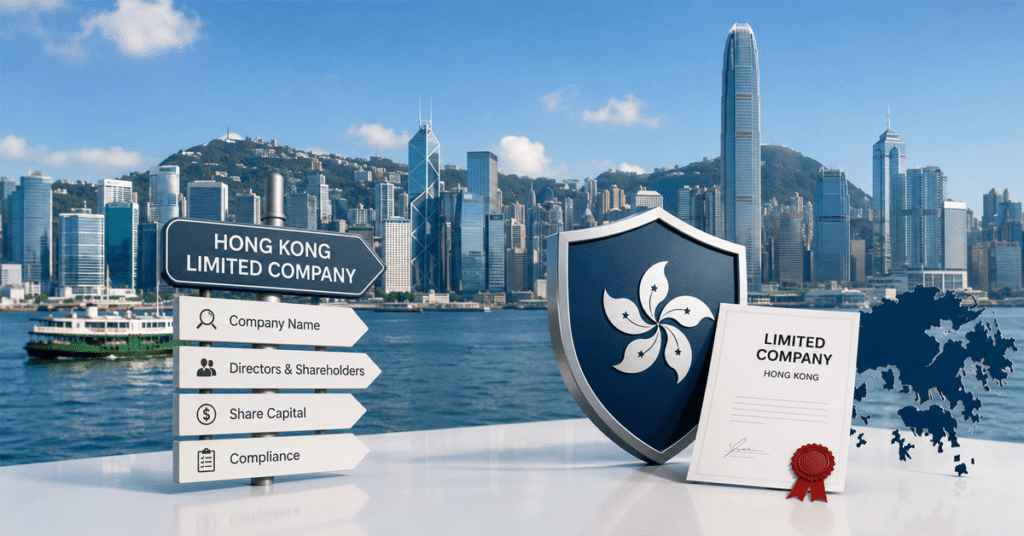
A private limited company is a popular form of company which offers businesses the benefits of having a separate legal organization, a more defined ownership structure and a more professional trading platform. The company can enter into contracts and hold assets, and can run independently of its shareholders. This may also help to separate business liabilities from personal finances, although directors must still act responsibly and meet their legal duties.
Hong Kong permits overseas individuals and companies to own shares in a local company. There is generally no requirement for a shareholder or director to live locally. That flexibility is useful for international founders, but it does not remove the need for local administrative arrangements, accurate records and a registered office in Hong Kong.
A limited company is not automatically the right choice for every activity. A sole proprietorship Hong Kong business may work for a very small business in the local area that has a simple ownership structure and low risk; a partnership may be suitable for a business that is based on a partnership of personal commitment. Where the business expects to take on customers, staff, investors or long-term commercial commitments, the limited company structure often offers more certainty.
If you plan to register a sole proprietorship for Hong Kong businesses instead of incorporating a limited company, check the legal responsibilities and future growth opportunities before making your decision.
Founders who are still comparing Hong Kong company structures should evaluate liability, ownership flexibility, compliance obligations and future growth plans before making a decision.”
Prepare the essentials before submitting an application
Most registration delays begin before the form is filed. A founder may have a preferred trading name but no alternative, incomplete identity documents, or uncertainty over who will own and manage the business. Resolving these points early keeps the process orderly.
Choose a compliant company name
The proposed name should not be identical to or similar to an existing company name. Also avoid wording that could imply an unapproved connection with government bodies. The company can have an English name, a Chinese name, or both, but an English and Chinese name cannot just be a direct translation presented together as one name.
It is wise to prepare two or three suitable options. As well as being a brand, it’s also a practical name; it should be easy to use consistently by customers, banks, suppliers and employees on invoices, agreements and official records.
Confirm ownership and management
A private company needs at least one director who is a natural person and at least one shareholder. One person can fill both roles. Directors are responsible for the company’s management and statutory duties, while shareholders own the company through their shares.
There is usually no minimum paid-up share capital requirement beyond a nominal amount, and many new companies begin with a simple share structure. However, founders should think beyond registration. If ownership will be split between business partners, family members or investors, the number of shares and rights attached to them should reflect the commercial agreement rather than being chosen casually.
Put local company support in place
Every Hong Kong company must have a registered office address in Hong Kong. This is the official address for government correspondence and statutory records; it should not be treated as a purely administrative detail that can be overlooked after incorporation.
The company must also appoint a company secretary. Where the secretary is an individual, that person must ordinarily reside in Hong Kong. Where it is a corporate service provider, it must have a local presence. A sole director cannot also act as company secretary. For many founders, using experienced Hong Kong company formation services is the practical way to keep registers, filings and deadline management under control
The new company registration in Hong Kong process

Once the company details are confirmed, the application can be prepared for submission. For a standard private limited company, this normally includes the incorporation form, details of directors and shareholders, the registered office address, and the company’s constitutional document.
Businesses that prefer to incorporate a company online Hong Kong should still ensure that all incorporation details and supporting documents are complete before submission.
Identity and address evidence will be needed for the people involved. If a corporate shareholder is part of the ownership structure, supporting documents for that entity and its authorised representatives may also be required. Documents issued overseas may need additional checking, especially where the ownership chain is more complex.
The company is issued with its Certificate of Incorporation and Business Registration Certificate after successfully registering. These are key documents, but they are not sufficient to launch a business. The company should next arrange its internal registers, issue shares properly, record key appointments and establish a clear process for receiving official correspondence.
Banks and payment providers will carry out their own due diligence. Their requirements vary according to the company’s activities, expected transaction volumes, customer locations and source of funds. Incorporation documents are essential, yet founders should also be ready to explain the business model with credible supporting materials such as contracts, a website, supplier details or forecasts. No adviser can guarantee that an account application will be accepted, so realistic planning is preferable to assuming that registration and account opening are one process.
Some businesses require additional licences or approvals before they begin particular activities. This can apply to areas such as food, education, financial services, employment agencies or regulated import and export work. Checking this early matters because the company may be incorporated while its intended activity is not yet authorised to commence.
Build your financial records from the first transaction
Many small companies leave bookkeeping until their first tax deadline. By then, receipts may be missing, personal and company spending may have become mixed, and a simple reconciliation can take far longer than expected. A simple financial routine at the beginning is more cost-effective and provides management with more information.
Record sales and payments promptly and keep records of invoices and payment evidence in a separate business account if possible. Determine who is responsible for approving expenditure, who will be raising the invoices and where the financial documents will be kept. For companies with regular transactions, accounting software and a defined accounts payable process can improve control without requiring a full internal finance team.
The company’s financial year end should also be considered carefully. A suitable date can make reporting easier, particularly where the business has seasonal income, overseas group reporting requirements or a planned funding timetable. The best choice depends on the business rather than a standard default.
Ongoing compliance is part of operating the company
A Hong Kong company has continuing responsibilities after registration. This involves maintaining statutory registers, ensuring its registered office and company secretary are up to date, filing an annual return on time and ensuring accounting records are kept properly.
Companies will also be required to maintain a Significant Controllers Register and designate a person to help authorised officers as needed. If directors, shareholders or addresses change, or if the share capital changes, then change those records and act on it; don’t put it off until filing time.
Tax obligations depend on the company’s activities, profits, staff and transactions. A business should keep reliable records from the beginning and respond to tax correspondence by the stated deadlines. Claims that profits are automatically exempt because customers or suppliers are outside Hong Kong can create unnecessary risk. Tax treatment is dependent on the facts, such as how the business is operated and the location.
For founders who have limited time, having company secretarial, bookkeeping, financial reporting & tax administration provided by the same responsible party can avoid the fragmentation of information between multiple parties. GEEKAYSYS is meant to assist companies in operating such responsibilities as an organized outsourced activity, thereby giving founders a level of visibility without having to deal with all of the administrative tasks.
A company registration should give a business momentum, not create a new source of uncertainty. If you plan to register a business in Hong Kong, start with the right ownership structure, appoint dependable local support, and keep records in order from the first day of trading. That leaves more time for the very thing that got the business going: creating a sustainable business.
FAQs
1. What is required to register a new company in Hong Kong?
The company requires information on directors and shareholders, registered office, company secretary and identification details.
2. What documents are issued after company registration?
A Certificate of Incorporation and a Business Registration Certificate will be issued.
3. Do I need a company secretary for a Hong Kong company?
All limited companies in Hong Kong are required to have a qualified company secretary.
4. What are the ongoing compliance requirements after registration?
There are statutory obligations for companies to keep statutory records, submit annual returns, keep accounting records, and pay tax.
5. Can I start trading immediately after company registration?
Registration is usually the first step to being able to run, but some businesses may need extra licences or approvals.