



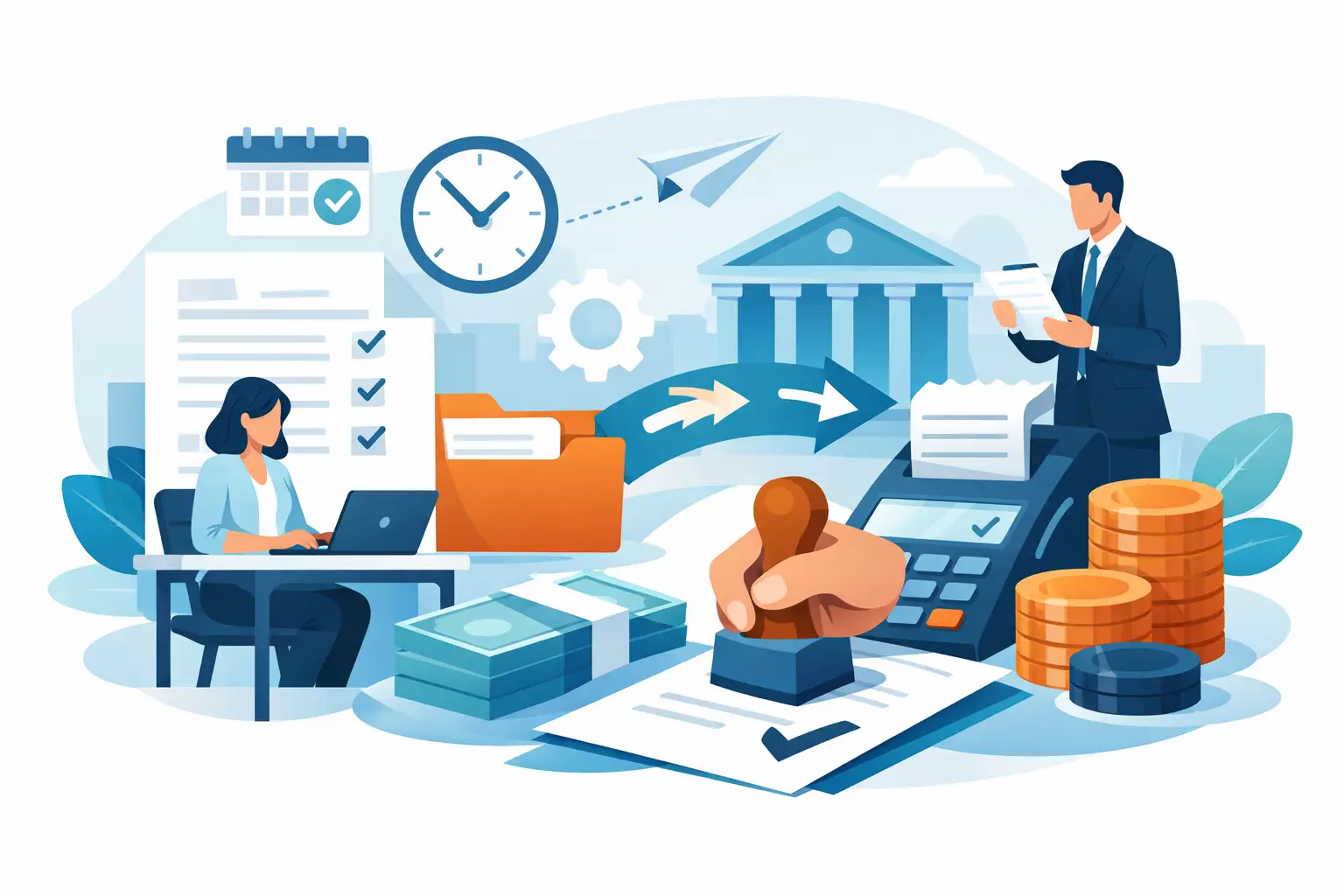
A supplier chasing an overdue invoice is rarely just an administrative inconvenience. It can interrupt stock deliveries, weaken negotiating power and create unnecessary pressure on a founder already managing sales, staff and cash flow. Learning how to manage accounts payable well gives a business control over when money leaves the bank, why it is being paid and whether the payment is properly supported.
For growing businesses, accounts payable is not simply a record of bills waiting to be paid. It is a working process that connects purchasing, supplier relationships, bookkeeping and cash planning. A clear process reduces avoidable errors while ensuring legitimate suppliers are paid within agreed terms.
How to manage accounts payable with clear ownership
The first requirement is ownership. Even in a small company, one person should be responsible for receiving invoices, checking that they are complete, recording them promptly and preparing them for approval. This does not mean that person should approve every payment. Separating preparation from approval is a sensible control, particularly as payment values and transaction volumes increase.
Set out the process in writing, using language your team can follow. It should explain where suppliers send invoices, who checks them, who approves spending, when payments are made and where supporting records are stored. A process that lives only in one employee’s memory becomes a risk when that person is unavailable or leaves the business.
Clear approval limits are equally useful. A team member may be authorised to approve routine operating costs up to an agreed amount, while larger commitments require a director’s approval. The right thresholds depend on the size of the business, its cash position and the nature of its purchases. The aim is not to create bottlenecks, but to make sure expenditure receives the appropriate level of review.
Capture invoices promptly and consistently
Invoices should be sent to a dedicated business email address or uploaded through an agreed system, rather than arriving across personal inboxes, messaging apps and paper files. This gives the business one reliable point of entry and makes it less likely that a bill will be missed.
When an invoice arrives, check the supplier name, invoice number, date, payment terms, bank details, currency, tax treatment and total. It should also be clear what goods or services were supplied and which part of the business requested them. If key details are missing, resolve the issue before the invoice is scheduled for payment.
Record approved invoices as soon as practical, rather than waiting until the end of the month. Prompt entry provides a more accurate picture of liabilities and available cash. It also helps management identify upcoming commitments before they become urgent. For businesses with regular overseas suppliers, recording the original currency and the exchange rate policy consistently is particularly important.
Keep the original invoice, purchase order where applicable, delivery confirmation and approval record together. Digital storage is usually more practical than paper files, provided documents are organised in a consistent folder structure and can be retrieved easily. Good records support reliable bookkeeping and reduce time spent looking for evidence months later.
Match bills to what was ordered and received
Not every business needs a complex purchasing department, but every business needs a way to confirm that it is paying for a genuine and authorised expense. For goods, this often means matching the supplier invoice to the purchase order and proof that the goods were received. For services, the relevant manager should confirm that the work was completed as agreed.
This check is especially valuable where invoices are recurring, quantities can vary or several people are able to place orders. It can reveal duplicate invoices, incorrect prices, unexpected delivery charges or subscriptions that are no longer needed. If the business does not use formal purchase orders for smaller expenses, an approved written request or documented management approval can still provide a useful record.
There is a trade-off. Requiring multiple checks for every low-value, routine bill can slow the business down. A practical approach is to apply stronger controls to higher-value payments, new suppliers, unusual transactions and changes to supplier bank details, while using streamlined approval for established recurring costs.
Plan payments around due dates and cash flow
A well-run accounts payable function pays bills on time, but not automatically the moment an invoice arrives. Paying too early can put avoidable strain on working capital. Paying late can lead to fees, supply disruption and damaged supplier confidence. The right approach is to maintain a payment calendar based on agreed terms and the company’s rolling cash forecast.
Review upcoming payments at least weekly. Group invoices by due date, supplier priority and payment method, then compare them with expected receipts, payroll commitments and other essential outgoings. Where cash will be tight, act early. Speak to the supplier before the due date, explain the position professionally and agree a realistic arrangement where possible.
Do not treat every payable in the same way. A landlord, a critical software provider and a key stock supplier may have greater operational importance than a non-essential discretionary purchase. At the same time, avoid allowing personal preference to replace documented priorities. A consistent policy helps directors make sound decisions when cash is constrained.
Early-payment discounts can be worthwhile, but only when the saving outweighs the value of retaining cash. Similarly, longer payment terms may help cash flow, yet they should be agreed fairly and honoured. Strong supplier relationships are built through clear communication as much as timely payment.
Protect payment controls and supplier data
Payment fraud often begins with an apparently ordinary email asking for bank details to be changed. Treat any request to amend supplier payment information as high risk. Verify it using a known telephone number or established contact, not the number or link contained in the request itself. Record who carried out the verification and when.
The person entering a payment should not be the only person able to release it. Dual authorisation is a sensible safeguard for bank payments, particularly for higher-value transactions. Access to accounting software and online banking should also be limited to the people who genuinely need it, with permissions reviewed when roles change.
Regularly review the supplier master list. Remove duplicate entries, inactive suppliers and outdated contacts. Check for similar supplier names, repeated bank accounts and unusual payment patterns. These simple housekeeping measures make errors easier to spot before money leaves the business.
Reconcile accounts payable regularly
At month end, reconcile the accounts payable ledger to supplier statements and the general ledger. The purpose is to identify invoices recorded but not paid, payments made but not allocated, supplier credits, duplicate entries and disputed balances. Waiting until year end makes these issues harder and more expensive to untangle.
Aged payables reports are particularly useful for directors. They show what is due now, what is due soon and what is overdue. Used alongside a cash flow forecast, they provide a realistic view of short-term obligations rather than relying on the bank balance alone.
If a supplier statement does not agree with your records, investigate promptly. The difference may be a timing issue, an unrecorded credit note or an invoice that was sent to the wrong email address. Resolving discrepancies early protects both the accuracy of the accounts and the commercial relationship.
Use systems that fit the business
A spreadsheet may be sufficient for a very small business with few monthly invoices, but it relies heavily on manual discipline. As invoice volumes grow, accounting software can improve visibility by recording due dates, approval status, payment history and supplier balances in one place. The best system is not necessarily the most elaborate one. It is the one your team can use consistently and that produces reliable records for management.
For businesses using TallyPrime or another accounting platform, configure supplier records, payment terms, approval procedures and reporting categories carefully from the start. A poorly structured system can still produce confusing information. Regular bookkeeping support helps ensure that transactions are recorded consistently and that management reports reflect the real position.
Outsourcing the day-to-day administration can also be practical when the business does not need a full internal finance team. The key is to retain clear internal approval authority while a trusted provider manages invoice processing, record keeping, payment schedules and reporting. This gives founders oversight without requiring them to handle every document themselves.
Accounts payable works best when it is treated as a routine management discipline rather than a last-minute payment task. With clear ownership, accurate records and sensible controls, your business can protect cash flow while showing suppliers that it is dependable to work with.